

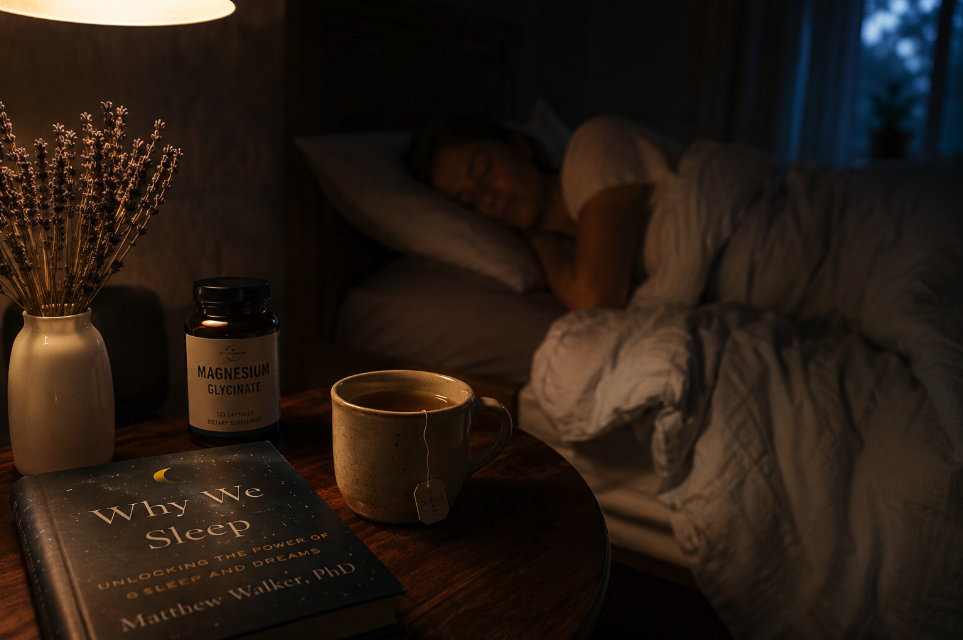
It’s 1am. You’ve counted sheep, counted your regrets, and counted the hours until your alarm goes off.
Sound familiar?
Before you reach for another pill, there’s a whole toolkit of natural remedies that actually have research behind them. Not magic. Not woo. Just biology, used correctly.
Here’s what actually works.
Magnesium, the Mineral You’re Probably Missing
Most people are low on magnesium and don’t know it.
It’s the mineral that helps your nervous system downshift from “alert” to “rest.” A deficiency keeps your body wired even when you’re exhausted.
Try this: a magnesium glycinate supplement in the evening, or magnesium-rich foods like almonds, spinach, and pumpkin seeds earlier in the day.
Herbal Tea, Minus the Hype
Chamomile isn’t a fairy tale. Valerian root isn’t either.
Both have mild sedative properties studied in clinical trials. Not knockout-drop strong. Just enough to nudge your body toward sleep.
Try this: a cup 30-45 minutes before bed. The ritual matters as much as the herb.
Weighted Blankets Aren’t a Gimmick
They apply deep pressure stimulation, which can lower cortisol and increase serotonin.
It’s the same principle behind swaddling a baby. Turns out grown adults like being swaddled too. We just don’t say it out loud.
The 90-Minute Wind-Down
Your body doesn’t switch off like a light. It dims, gradually, if you let it.
Give yourself a real transition, not a screen-to-pillow sprint.
Try this: stop scrolling 90 minutes before bed. Dim the lights. Do something boring on purpose.
Lavender, Actually Backed by Science
Not just a candle aisle cliché. Lavender essential oil has measurable effects on heart rate variability and sleep quality in several studies.
Try this: a few drops on your pillow, or a diffuser running for the last hour before bed.
Cool Rooms Beat Cozy Rooms
Your body temperature needs to drop to initiate sleep. A hot room fights that.
Try this: 65-68°F (18-20°C). Colder than feels “cozy,” warmer than feels punishing.
Consistency Beats Everything on This List
You can do all of the above and still sleep badly if you go to bed at 10pm on Tuesday and 2am on Friday.
Your circadian rhythm doesn’t care about your excuses.
Try this: same wake time, every day, weekends included. It’s the least glamorous fix and the most effective one.
None of these are overnight miracles. Sleep isn’t a switch, it’s a habit you build one boring, consistent night at a time.