
You wake up, and your lower back feels like it lost a fight overnight.
You didn’t do anything. Or so it seems.
What actually happened is eight hours of your spine holding an awkward position while you had zero say in the matter.
Your Spine Doesn’t Clock Out When You Sleep
You spend a third of your life lying down.
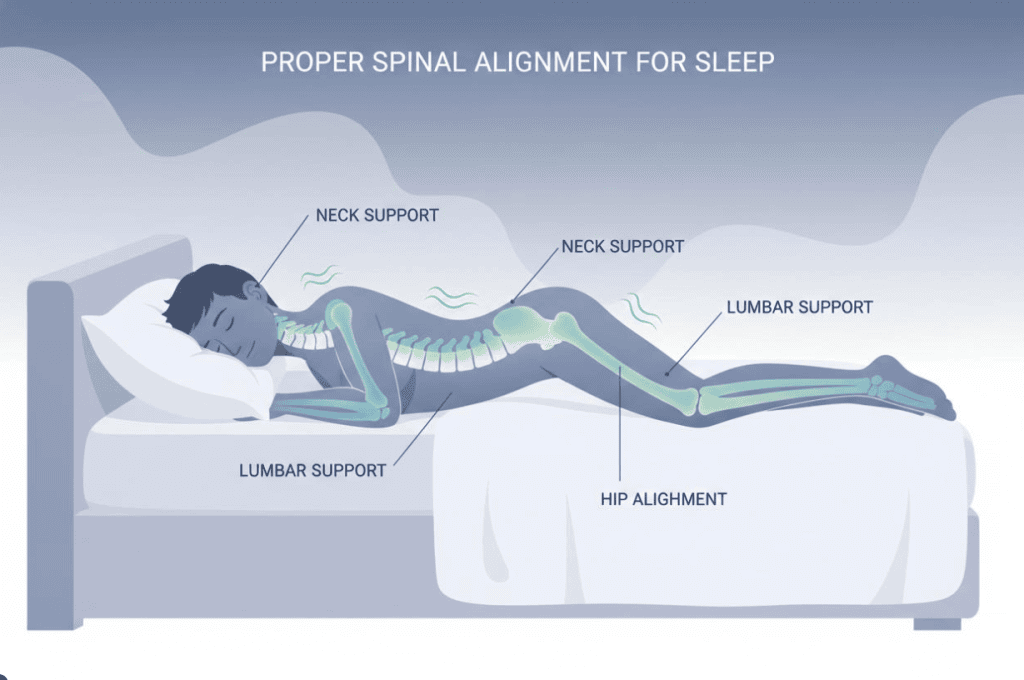
Your spine doesn’t get a break just because you’re unconscious.
It’s still:
- Bearing weight
- Trying to stay aligned
- Reacting to whatever position you’ve put it in
Bad alignment for eight hours a night adds up fast, the same way bad posture at a desk does.
Stomach Sleeping Is the Worst Offender
Sorry to the stomach sleepers.
This is the position spinal specialists dislike the most.
It forces your:
- Neck to twist to one side for hours
- Lower spine to lose its natural curve
If you can’t quit it entirely, try this: a thin pillow (or no pillow) for your head, and a flat pillow under your pelvis to reduce the arch in your lower back.
Back Sleeping Is the Gold Standard, With a Catch
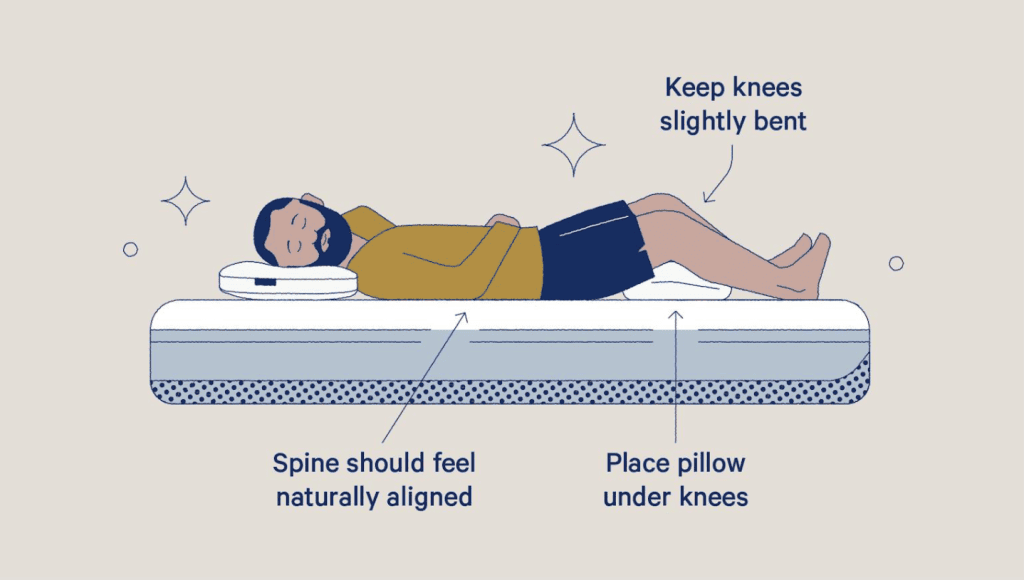
Back sleeping distributes weight evenly and keeps your spine in a neutral position.
Great news—if you can actually sleep that way.
The catch: it worsens sleep apnea and snoring for some people, because gravity lets the tongue and soft tissue fall backward into the airway.
Try this: a pillow with proper neck support, and a small pillow under your knees to maintain your spine’s natural curve.
Side Sleeping Is the Realistic Middle Ground
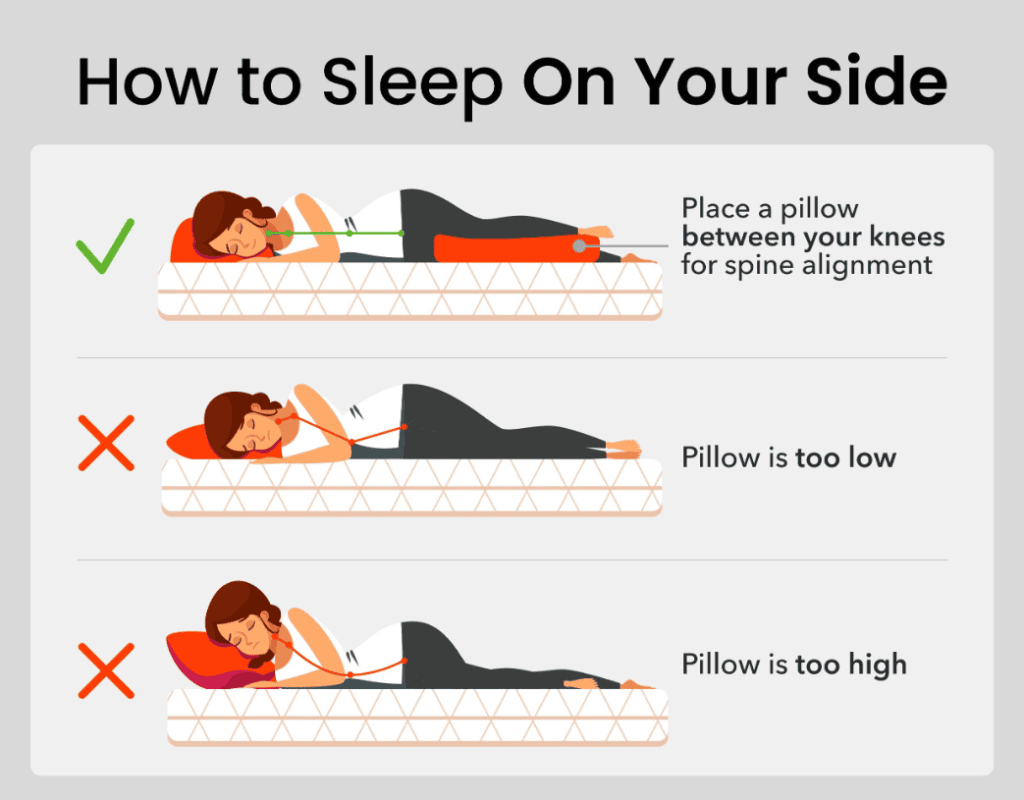
Most people sleep on their side, and for good reason.
It’s generally spine-friendly, if you set it up correctly.
Try this:
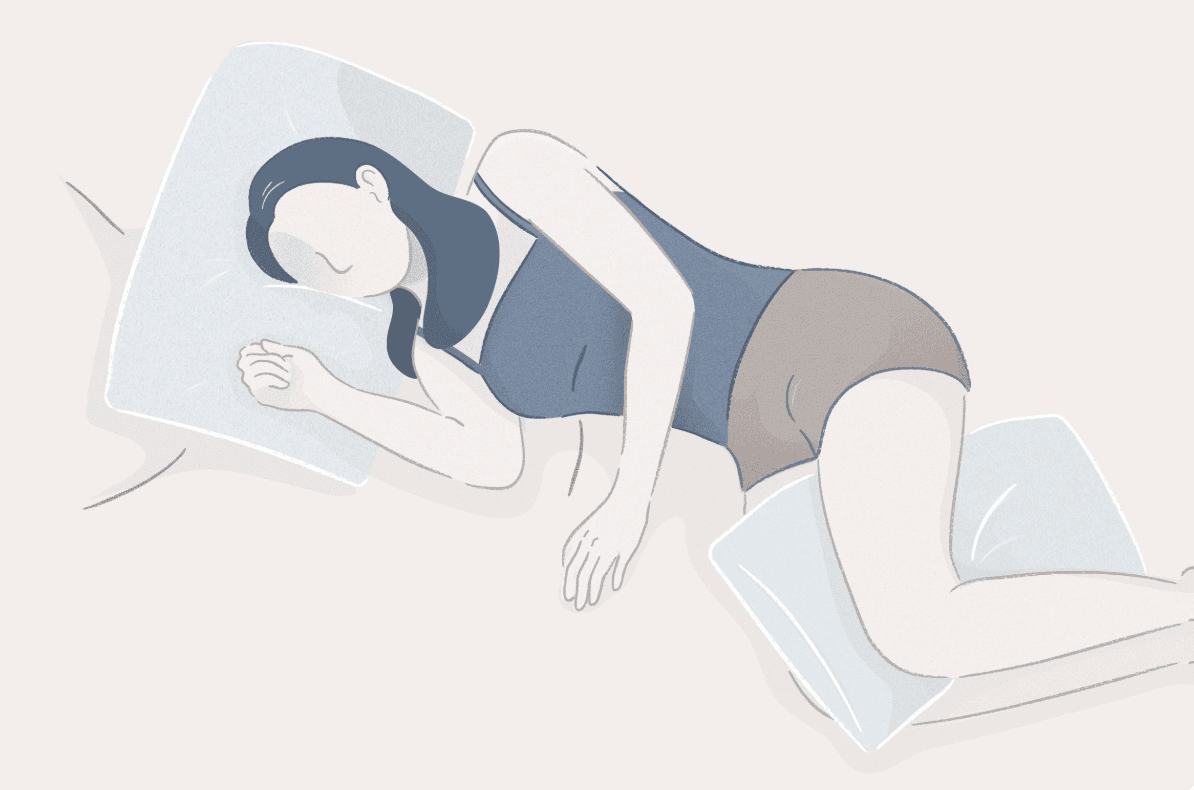
- A pillow between your knees to keep your hips aligned
- A pillow that fills the gap between your shoulder and ear, so your neck isn’t tilted all night
Your Mattress Is Doing More Work Than You Think
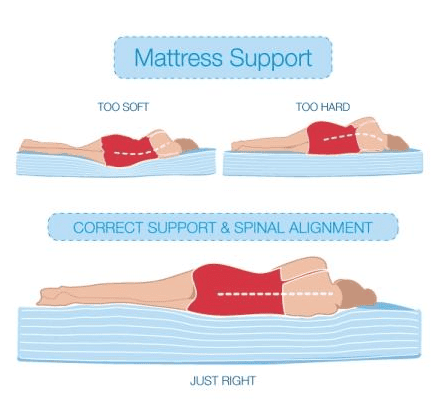
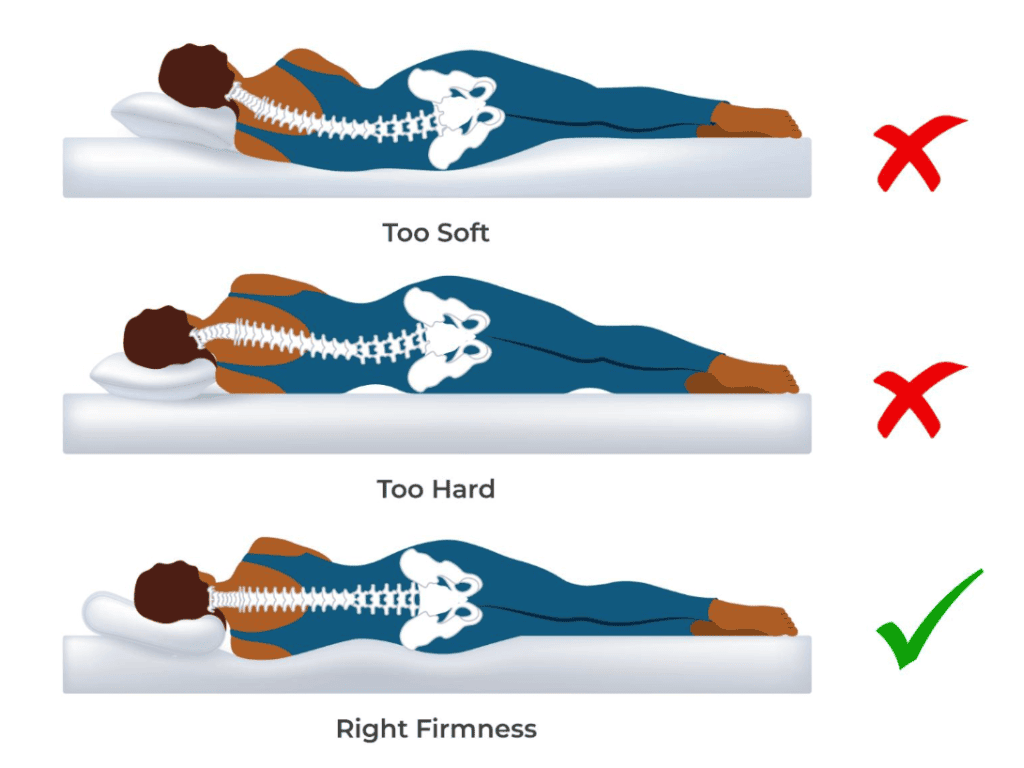
Even perfect positioning fails on a mattress that’s too soft or too firm for your body type.
A mattress that’s too soft:
- Lets your hips sink
- Makes your spine curve unnaturally
Too firm, and:
- Pressure points build up at your shoulders and hips
- You shift and wake repeatedly
The “right” mattress isn’t the trendiest one. It’s the one that keeps your spine in a straight line from your head to your hips.
Small Adjustments, Real Payoff
You don’t need to relearn how to sleep overnight.
Start with one change—a pillow placement, a mattress topper—and give it two weeks before judging the results.
Your spine has been quietly compensating for years.
It’s not asking for much:
Just a little help holding its shape while you’re not paying attention.