

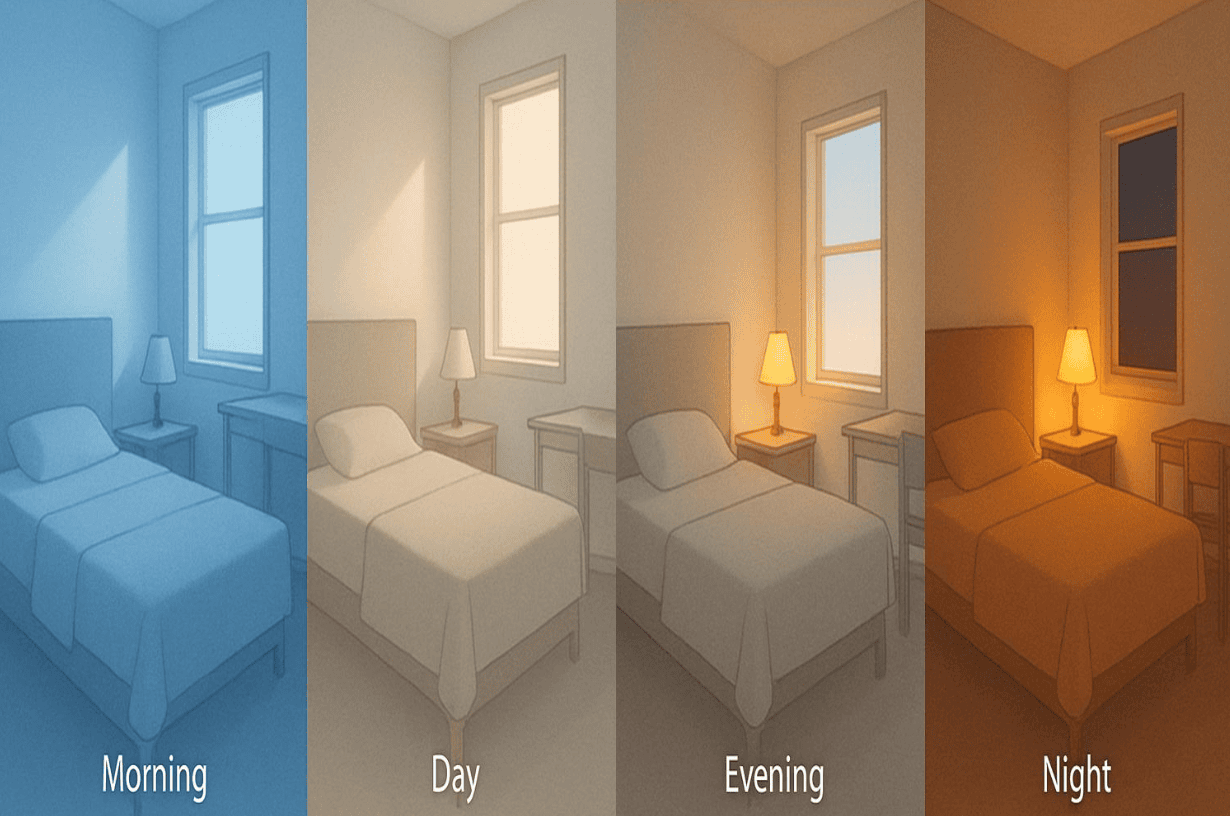
Your bedroom lamp is sabotaging your sleep. Probably has been for years.
Not because it’s ugly. Because of what kind of light it puts out, and when.
Light Is a Message to Your Brain, Not Just a Convenience
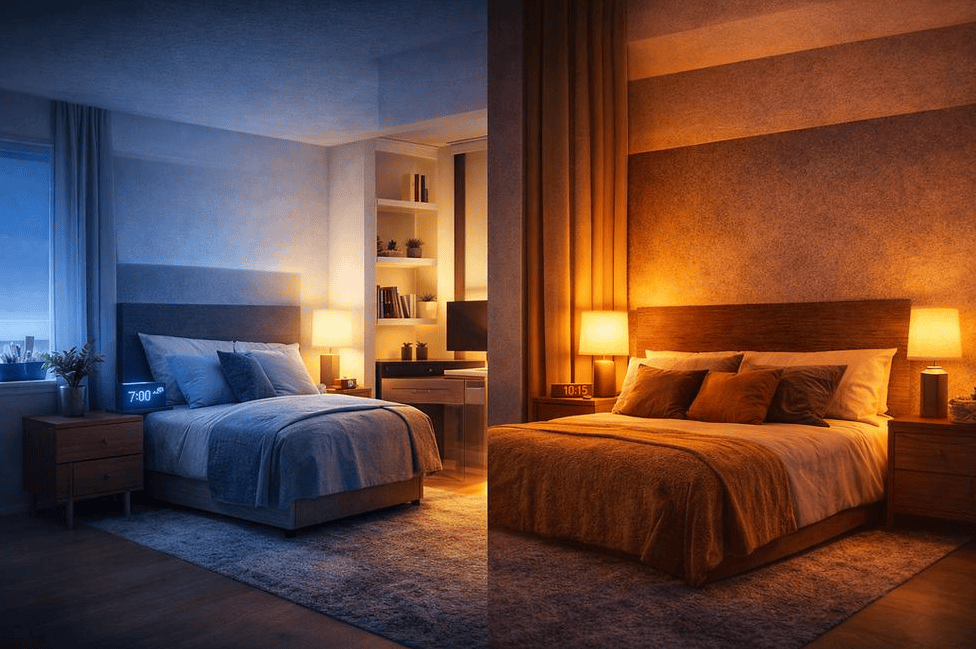
Your circadian rhythm runs on light exposure. Bright light says “stay alert.” Dim, warm light says “start winding down.”
Most homes ignore this completely and just light every room the same way, all day, until someone flips the switch off entirely.
Blue Light Isn’t Just a Screen Problem
Overhead LED bulbs marketed as “daylight” or “cool white” pump out the same blue-heavy wavelengths as your phone.
If your ceiling light is basically a second phone screen, your brain doesn’t know the difference.
Fix the Evenings First
You don’t need to overhaul your whole house. Start with the two or three hours before bed.
Try this: switch to warm white bulbs (2700K or lower) for evening lamps. Skip overhead lighting after dinner. Use lamps at eye level or below instead of harsh ceiling light.
Dimmers Are an Underrated Investment
A dimmer switch costs less than a bad night’s sleep, repeated for a month.
Try this: install dimmers in the bedroom and living room, and get in the habit of lowering the lights gradually as the evening goes on, mimicking a sunset instead of flipping a switch from “office” to “off.”
Morning Light Matters As Much As Evening Darkness
People obsess over blackout curtains and forget the other half of the equation.
Bright light exposure in the morning anchors your circadian rhythm, making it easier to feel sleepy at the right time that night.
Try this: open the curtains immediately when you wake up, or step outside for a few minutes. Even on a cloudy day, outdoor light is far brighter than indoor lighting.
The Bedroom Itself Should Be a Light-Free Zone
Not dim. Dark.
Try this: blackout curtains, no glowing electronics, and if you need a night light for practical reasons, make it red or amber, since those wavelengths interfere with melatonin the least.
Small Changes, Compounding Effect
None of this requires a renovation. A few bulb swaps and a dimmer switch can shift how your whole evening feels.
Your house has been quietly telling your brain to stay awake. Time to change the message.
Light is the most underrated lever in your sleep routine, mostly because it’s invisible until you start paying attention to it.