
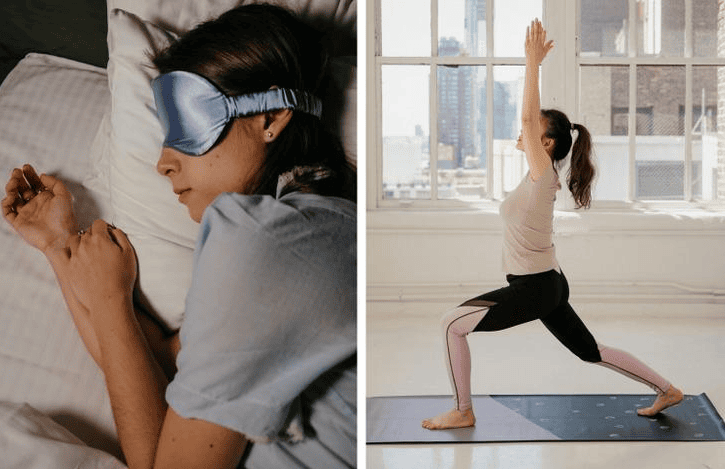
I used to think exercise and sleep were two separate line items on my “healthy habits” checklist.
They’re not separate. They’re the same system, feeding each other.
The Basic Mechanism
Physical activity increases the amount of deep, slow-wave sleep you get. This is the sleep stage responsible for:
- Physical recovery
- Immune function
- Memory consolidation
More movement during the day means more of the sleep that actually restores you at night.
It’s not complicated. It’s just underused.
It’s Not Just About Being Tired
There’s a lazy version of this advice:
“Exercise so you’re tired enough to sleep.”
That’s not really the mechanism.
Exercise regulates your circadian rhythm, lowers cortisol over time, and helps your body cool down at the right moment for sleep onset. Being “tired” is a side effect, not the main event.
Timing Matters More Than People Think
Morning or afternoon exercise tends to support sleep the most.
It reinforces your circadian rhythm by pairing activity with daylight, which anchors your internal clock.
Late-night intense exercise, on the other hand, can raise your:
- Core body temperature
- Heart rate
…right when your body’s trying to wind them down.
Try this: If you’re a night exerciser and you’re also struggling with sleep, shift your workout even two hours earlier and see what changes.
You Don’t Need to Train Like an Athlete
This isn’t a “go run a marathon” argument.
Even moderate activity can improve sleep quality, including:
- Walking
- Cycling
- Swimming
Studies consistently show that people who get regular moderate exercise report:
- Falling asleep faster
- Waking up less during the night
…compared to sedentary people.
Consistency Beats Intensity
A single hard workout won’t fix a week of bad sleep.
But a consistent pattern of moderate activity, most days, compounds over weeks.
Your body doesn’t respond to sleep advice the way it responds to a routine it can predict.
The Loop Runs Both Ways
Poor sleep also reduces motivation and energy for exercise the next day, which then worsens sleep again.
Once you’re in that loop, the way out isn’t willpower.
It’s picking the smallest, most doable version of movement and doing it anyway—even on the days you don’t feel like it.
A ten-minute walk on a bad day beats a skipped workout every time, because it keeps the loop moving in the right direction instead of stalling it out.
The Takeaway
Move more, sleep better.
Sleep better, move more.
It’s the rare feedback loop that actually works in your favor.