

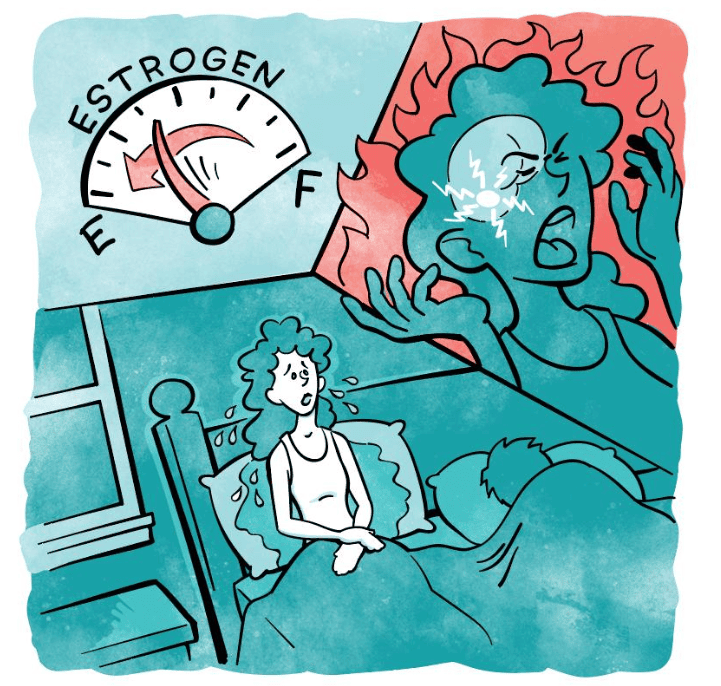
You wake up at 3am drenched in sweat, kick off the blanket, then you’re freezing twenty minutes later.
This isn’t insomnia in the traditional sense. It’s your hormones renegotiating the terms of your sleep, without asking you first.
Menopause disrupts sleep for up to 60% of women. You’re not imagining it, and you’re not stuck with it either.
Understand What’s Actually Happening
Falling estrogen and progesterone levels affect your body’s temperature regulation and your sleep architecture directly.
That’s why hot flashes hit hardest at night, and why sleep that used to be automatic suddenly feels like a project.
Dress for Temperature Swings, Not Comfort
Cozy pajamas are a trap right now.
Try this: moisture-wicking sleepwear, layered bedding you can peel off in seconds, and a bedside fan. You want to react fast, not fumble with a duvet at 3am.
Cool the Room Down Further Than Usual
The general advice is 65-68°F. During menopause, go lower if you can tolerate it.
Try this: 64-66°F, a cooling mattress pad, and breathable cotton sheets instead of anything synthetic.
Watch the Evening Triggers
Alcohol, caffeine, and spicy food can all provoke hot flashes. Timing matters as much as quantity.
Try this: cut caffeine by early afternoon, and skip the evening glass of wine if night sweats have been bad lately. Test it for a week before deciding it’s not worth it.
Talk to a Doctor About Hormone Therapy
This isn’t a natural-remedies-only situation for everyone.
Hormone replacement therapy has real, well-studied benefits for sleep disruption during menopause. It’s not right for every person or every medical history, but it’s worth an honest conversation with a doctor, not a Google search at midnight.
Build a Wind-Down That Doesn’t Depend on a “Good Night”
Some nights will be rough no matter what you do. That’s real.
Try this: a consistent wind-down routine (dim lights, no screens, same bedtime) that you do regardless of how the previous night went. Consistency softens the bad nights even when it can’t erase them.
Mind the Mood Piece Too
Anxiety and low mood often show up alongside menopause, and both make sleep worse.
The sleep problem and the mood problem aren’t separate. They’re feeding each other.
If irritability or anxiety are creeping in alongside the sleep loss, that’s worth naming to a doctor too, not just white-knuckling through.
Menopause changes the rules. It doesn’t mean you lose the game. It means you adjust, layer by layer, degree by degree, until your body finds its new normal.