

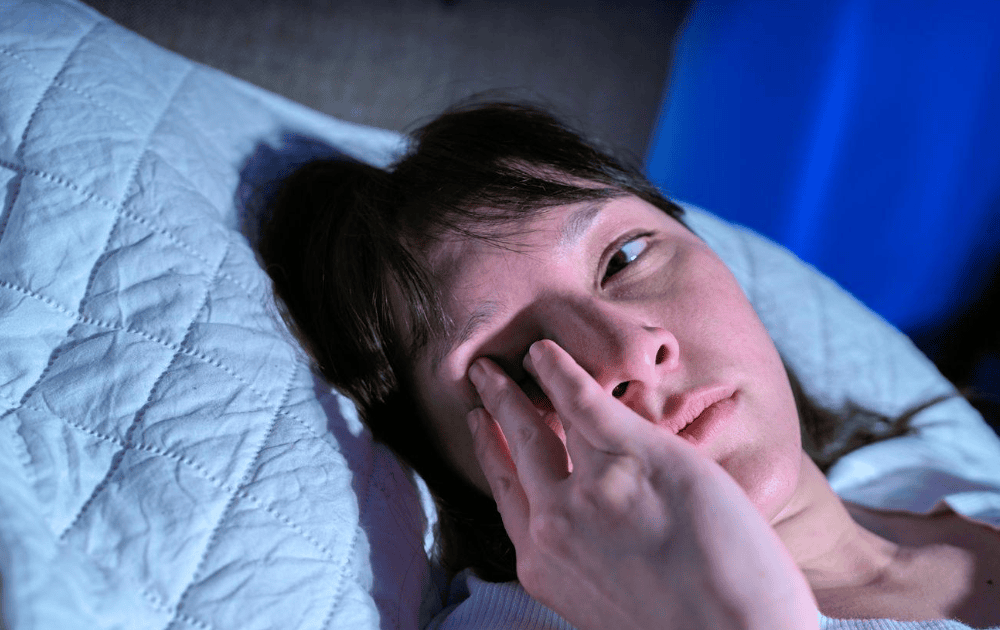
Nobody thinks to blame their eyes for a bad night’s sleep.
Most people blame:
- Stress
- Caffeine
- Their phone
…anything but the gritty, burning sensation they’ve been ignoring since 4pm.
Turns out dry eyes and bad sleep are more connected than most people realize.
The Overlooked Connection
Dry eye syndrome causes:
- Irritation
- Burning
- Discomfort
…that’s often worse at night, when tear production naturally slows even further.
That discomfort doesn’t just disappear because you closed your eyes. It can keep you from actually settling into sleep, or wake you up mid-night when the dryness spikes.
Screens Are Doing Double Damage

You already know screens before bed disrupt sleep through:
- Blue light
- Mental stimulation
What’s less talked about:
Staring at screens reduces your blink rate significantly, which worsens dry eye symptoms right before the exact hours your eyes need to recover.
Try this: the same screen curfew you’d use for sleep hygiene, but think of it as protecting your eyes too—not just your circadian rhythm.
Humidity Affects Your Eyes as Much as Your Airways
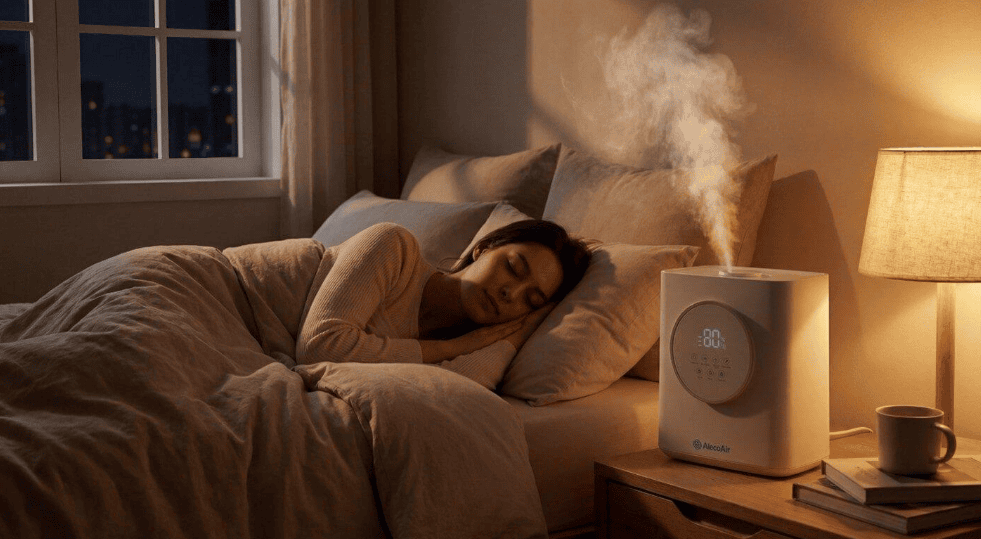
A dry bedroom—especially with heating or air conditioning running—pulls moisture from the air and from your eyes.
Try this: a humidifier in the bedroom, aiming for 40–50% humidity.
It’s the same fix recommended for nighttime coughing, and it works on dry eyes for the same underlying reason.
Warm Compresses Before Bed

This one sounds like a spa treatment.
It’s actually a legitimate clinical recommendation for dry eye management.
Try this: a warm, damp cloth over closed eyes for 5–10 minutes before bed.
It helps stimulate the oil glands in your eyelids, which improves tear quality—not just quantity.
Artificial Tears, Used Correctly

Preservative-free artificial tears before bed can make a real difference, especially if your symptoms flare overnight.
Try this: a nighttime gel formula specifically.
It’s:
- Thicker
- Longer-lasting than daytime drops
- Designed to protect the eye through hours of reduced blinking
Know When It’s More Than Dryness
Chronic dry eye can be linked to underlying conditions such as:
- Blepharitis
- Autoimmune issues
If warm compresses and a humidifier aren’t cutting it, that’s worth a conversation with an eye doctor—not just more artificial tears.
The Bigger Picture
Sleep problems don’t always start in your head. Sometimes they start somewhere as specific and overlooked as your eyelids.
Managing dry eye won’t fix every kind of insomnia.
But if you’ve been troubleshooting stress and screens and coming up empty, your eyes might be the missing piece nobody thought to check.